Kira Hagi: “Family was never just circumstance, but a space of responsibility where each generation contributed something”

20/05/2026 by Animawings / General

In a family where the name has become almost synonymous with performance, carving out a personal path can be the most courageous act of all. For actress Kira Hagi, art has been precisely that choice: a form of freedom, but also a way of understanding more deeply the world she comes from.

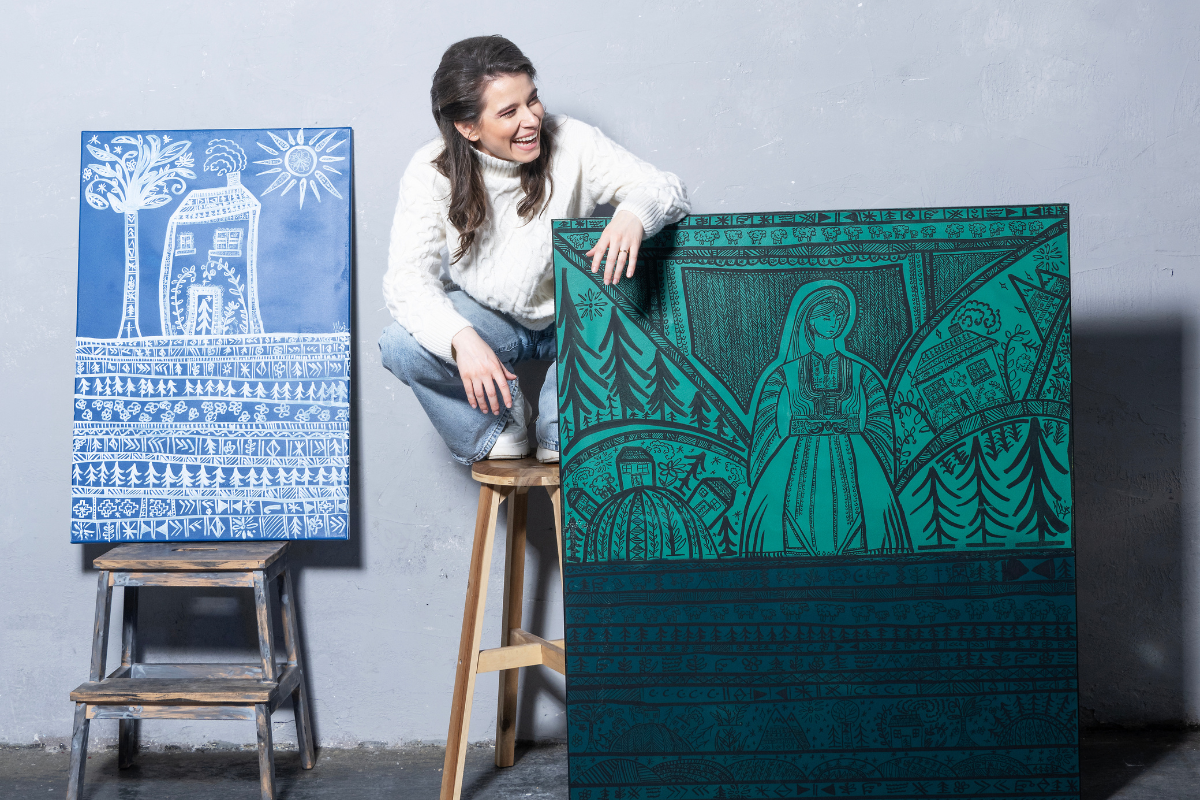
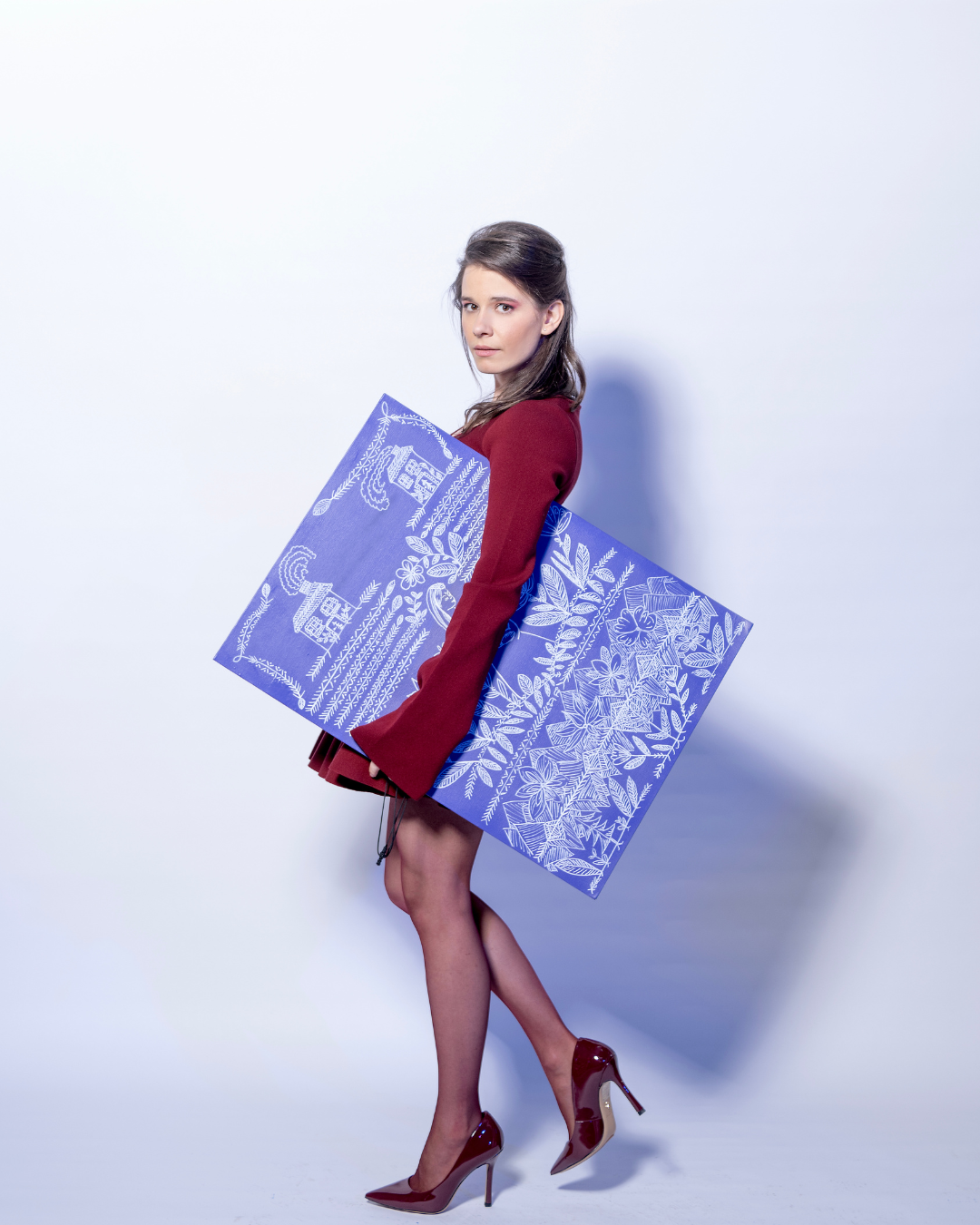
Her recent exhibition, AGAPI, brings together fragments of memory, emotion, and questions of identity and her works unfold as an intimate narrative about growth, belonging, and the search for one’s own voice. Behind the canvases and installations lies a powerful family history, one in which performance, discipline, and passion have been passed down from one generation to the next. The daughter of legendary footballer Gheorghe Hagi, Kira speaks with sensitivity about how her family shaped her artistic sensibility and about the memories that anchor her emotional universe.

In the interview below, Kira Hagi speaks about family and love, but also about roots, memory, and the freedom to shape her own path. 

How did the idea of creating a multimedia exhibition about your grandparents’ 50-year love story, and, in a way, about the Aromanian universe, come to you?

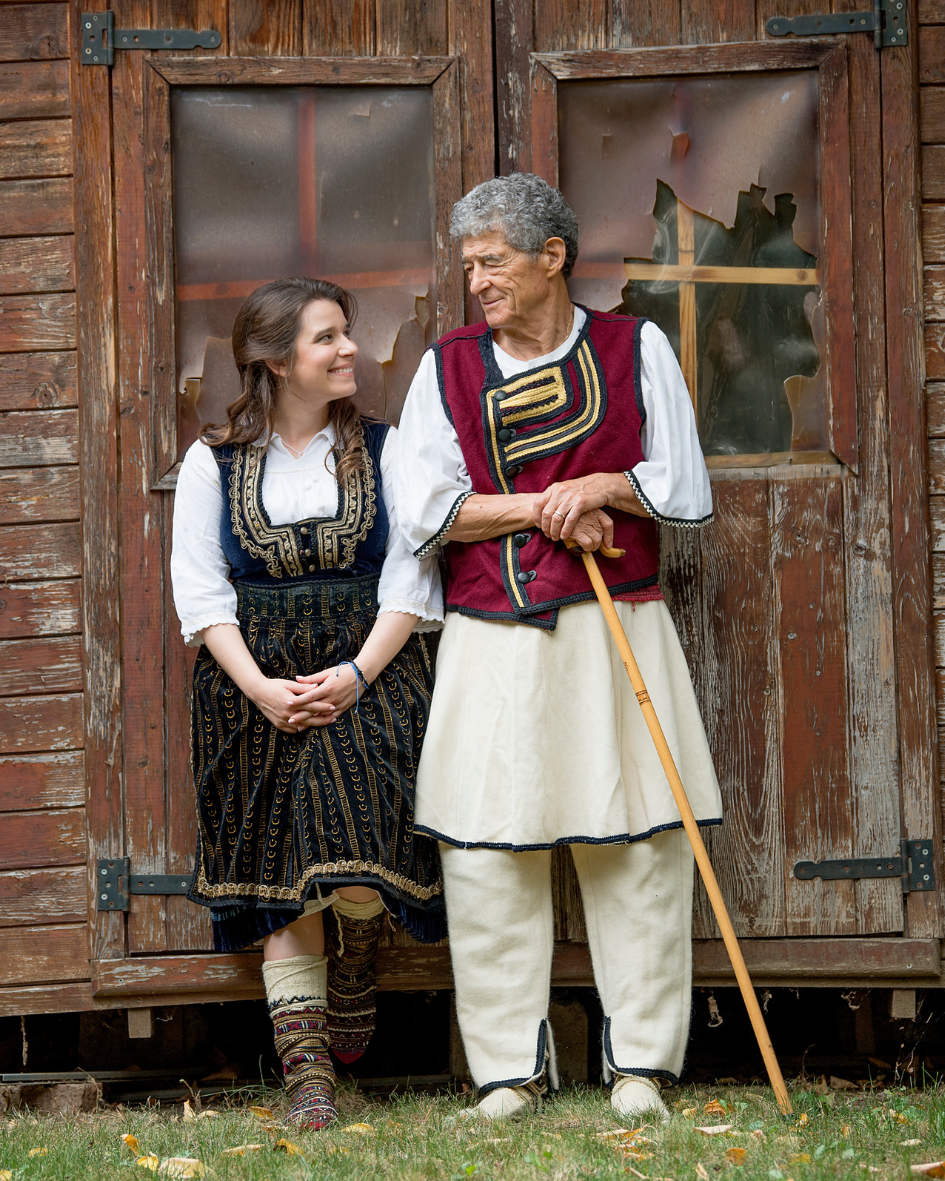
AGAPI did not begin as the idea for an exhibition, but as a nostalgic revelation. I was in the kitchen with my grandparents, listening to their stories, various memories and moments they often shared, almost like parables. While I listened, I found myself sketching on some sheets of paper on the table and later, by chance, I looked again at what I had drawn. I think that’s when I understood those sketches were a way of preserving something from those moments with them. That’s how the idea came to photograph them, then to film them and, meanwhile, alongside other projects, I would return to the easel, and the works began to take shape through the eyes of the child who listened to them, mesmerized. It felt like a fairytale world. That’s how the Meraki House came to life. Gradually, their love story became a gateway to something larger: the memory of a family.

You’ve transformed your family’s history into an artistic experience open to the public. Was it difficult to expose something so personal? Where does intimacy end and art begin?

Yes, it takes courage at first… but everything I’ve created over the years has been inspired by what I’ve lived. There is always a certain fragility when working with your own history. But for me, it was never about exposing intimacy, it was about transforming personal emotion into a universal experience, one that anyone can relate to.

I tried to maintain a balance while building the world of AGAPI, without invading my family’s private space. The moment the story came alive on canvas, I realized I was speaking about something universal. A deep connection any grandchild can have with their grandparents. Once I understood that, and once we began building the “Meraki House” together with my husband, Thomas, I knew this story deserved to be told. Of course, I spoke to my grandparents first and asked if they felt comfortable with what I had created. For them, this project was a celebration, so I gathered my courage and brought it to the Romanian Peasant Museum, and it will continue to travel to other cities across Romania. 

You come from a large, close-knit family. What lies at the heart of your family story? How was it built? What mattered most?

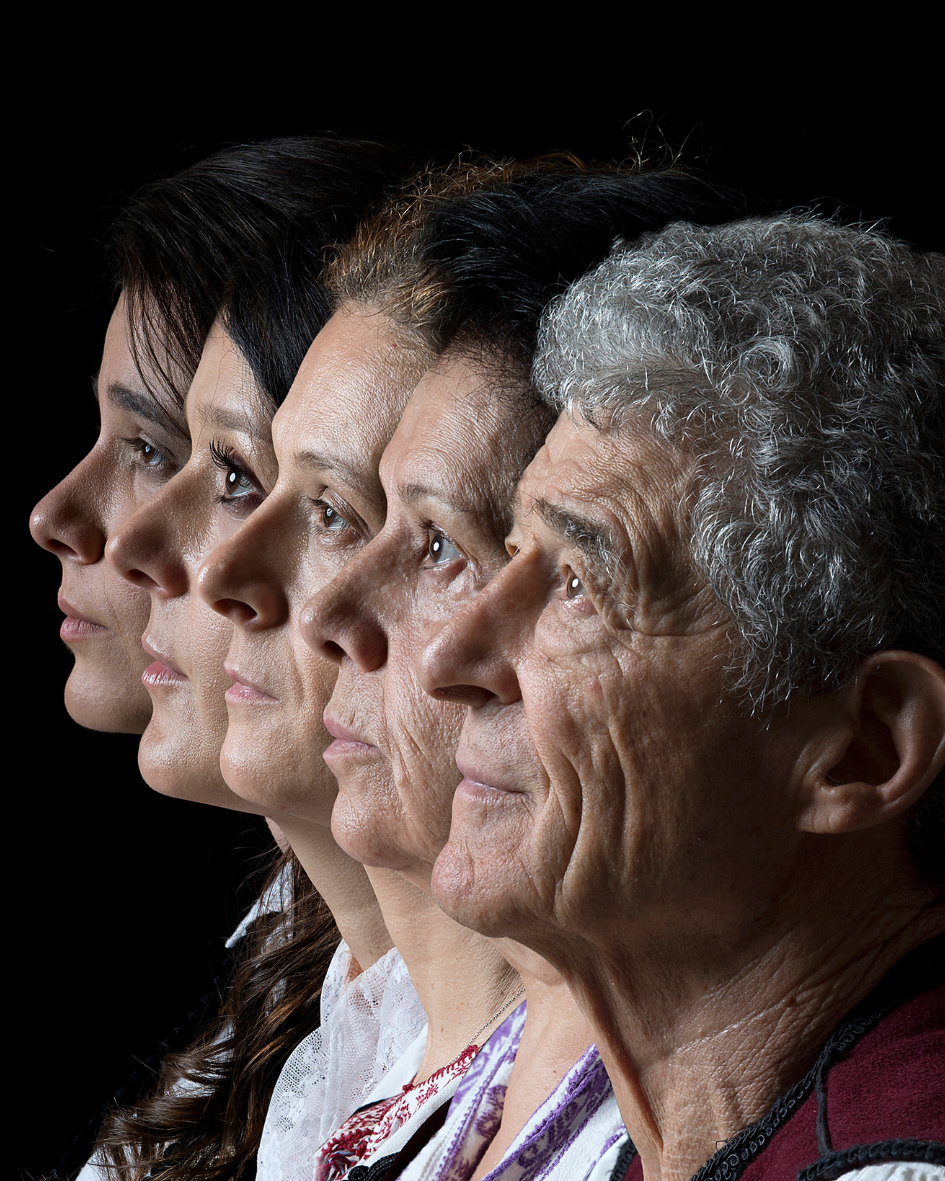
We are responsible for one another. My grandparents built their lives through hard work, but above all through a strong sense of belonging. Family was never just a coincidence, it was a space of responsibility, where each generation contributed something.

What aspects of your family heritage did you gather, present, and reinterpret in your exhibition?

Seemingly simple things: objects, photographs, textiles, fragments of conversation. I tried to create a space where these elements (image, sound, object) become a framework for a deeper truth: true, unconditional love, the kind of love where, after five decades together, you still dance with your partner at every celebration, you can still get upset with them, and then make peace through a love that is even stronger than at the beginning. It is the embodiment of what we call “true love.”

When you paint, photograph or film, what are you trying to capture and why?

I’m interested in authentic moments in which anyone can recognize themselves. I believe the truth of a story lies in those details. Through painting, photography, or film, I try to preserve those moments in a stylized artistic form, because, of course, it is all filtered through my own subjective lens.

We live in a world where memory is increasingly stored in phones and the cloud. Do family stories still have the same power to define our identity?

It’s an effort worth making. I highly recommend it. Technology helps us archive things, but identity must be lived in real time. I think we all have people we can no longer ask questions. Even if it’s just out of curiosity, it’s worth making time and having patience to gather the stories that are part of our DNA.

In doing so, we learn not to repeat mistakes, and we understand how to preserve our enthusiasm and zest for life. It’s one thing to read about love or watch films about it, and quite another to understand it from someone who has truly lived it. Family stories are how we understand who we are, where we come from and where we may be going.

What have you learned from your grandparents? What memories do you carry with them?

Patience. It’s something I often struggle with, and they always bring me back into balance. They were right to teach me how to wait. I learned what love truly is, not the declarative kind, not something optional or with an expiration date. But what it means to be with someone for more than half a century (55 years, to be exact, this year). My grandfather tells stories in a way that can hold your attention for hours. My grandmother has endless energy and a constant care for every member of the family. From her, I learned that your time is the greatest gift you can offer others. And about the power of small gestures. Of course, this is only a small part of what I’ve learned… My God, my grandparents cannot be described in just a few words. This project is simply my way of thanking them for being in my life, for teaching all of us through the power of their example. From them, I’ve also learned not to lose hope in difficult moments, but also not to be carried away when things are going well.